
The Assist
Your monthly shortcut to the things we've found useful, delightful, and surprisingly effective in the ongoing work of raising and educating kids.

We spend a lot of time here thinking and writing about parenting, anxiety, behavior, relationships, routines, and the general chaos of trying to raise humans while also remaining moderately functional ourselves.
Which is why we have an enormous appreciation for anything that makes life a little easier, smoother, more interesting, or simply more enjoyable. Sometimes that's a parenting strategy. Sometimes it's a book that changes how you think. Sometimes it's a snack, a podcast, a gadget, or a song that somehow prevents a minor family meltdown.
As ravenous readers, avid listeners, and proud gear junkies, we are constantly filing away things that might be enriching, nutritious, delicious, or delightful; that might take the edge off a tough afternoon; result in a smooth road trip or flight; or simply offer a new way of thinking about an intractable problem.
To that end we’re trying something new: The Assist — a lighter, more informal recurring post where we share things we genuinely use, love, recommend, or keep coming back to.
Importantly: this is not going to become a “buy these seventeen beige wellness products” situation. We are both far too tired and skeptical for that. Think less influencer content, more, “A trusted friend with a professional background texting you what’s actually worth your time.”
This month’s edition is free for everyone while we test-drive the format. Going forward, these posts will become a subscriber perk alongside the longer Playbooks.
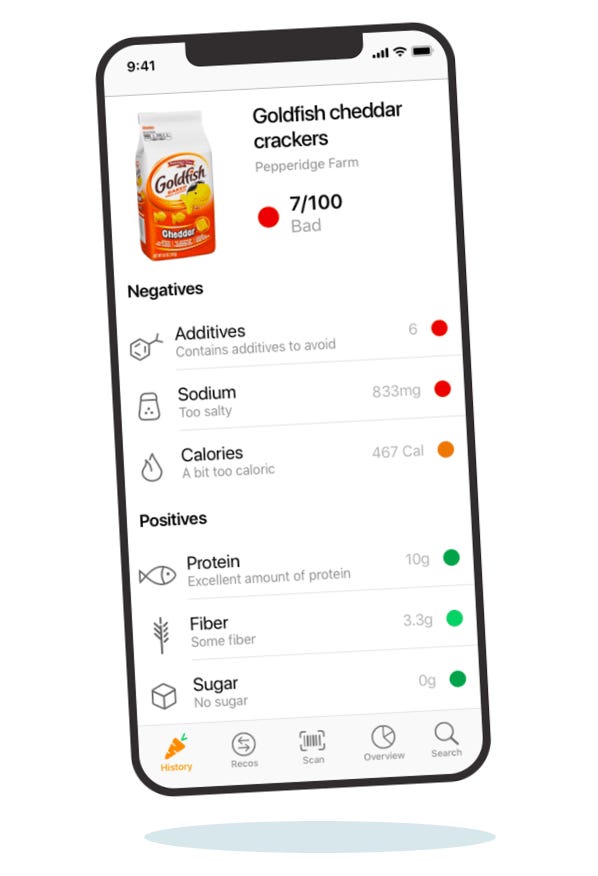
Alex: We have turned many of our friends onto Yuka, an app that provides a rating on a scale of 0-100 of the nutritional value of any item with a barcode. Be forewarned: the app might change the way you shop.
Those Whole Grain Cheddar Goldfish that you thought were a healthy snack option? They score a 9 due to high risk additives and sodium content. The Life Cereal you grew up believing was nutrition in a box? Only a 39 (too much sugar and sodium).
Meanwhile the Kettle Chips Backyard Barbecue that you thought was a guilty pleasure? It scores a “good” rating of 60! Decent fiber and protein content while remaining low in sugar. And the DeeBee’s Organics Superfruit Freezie Pops that your kids consider dessert? A 94.
We’ve found Yuka to be an excellent information source that we take with a grain of salt (but not too much sodium). It is up to each family to decide what they care about in regards to nutritional value. With our own kids, we don’t mind foods that score low because of a high caloric content, since we assume they are engines that burn a lot of fuel. But, as an example, we tend to shy away from foods that have a lot of additives. Use it as you see fit, and remember that it is all about balance in the end.
Stolen Focus by Johann Hari
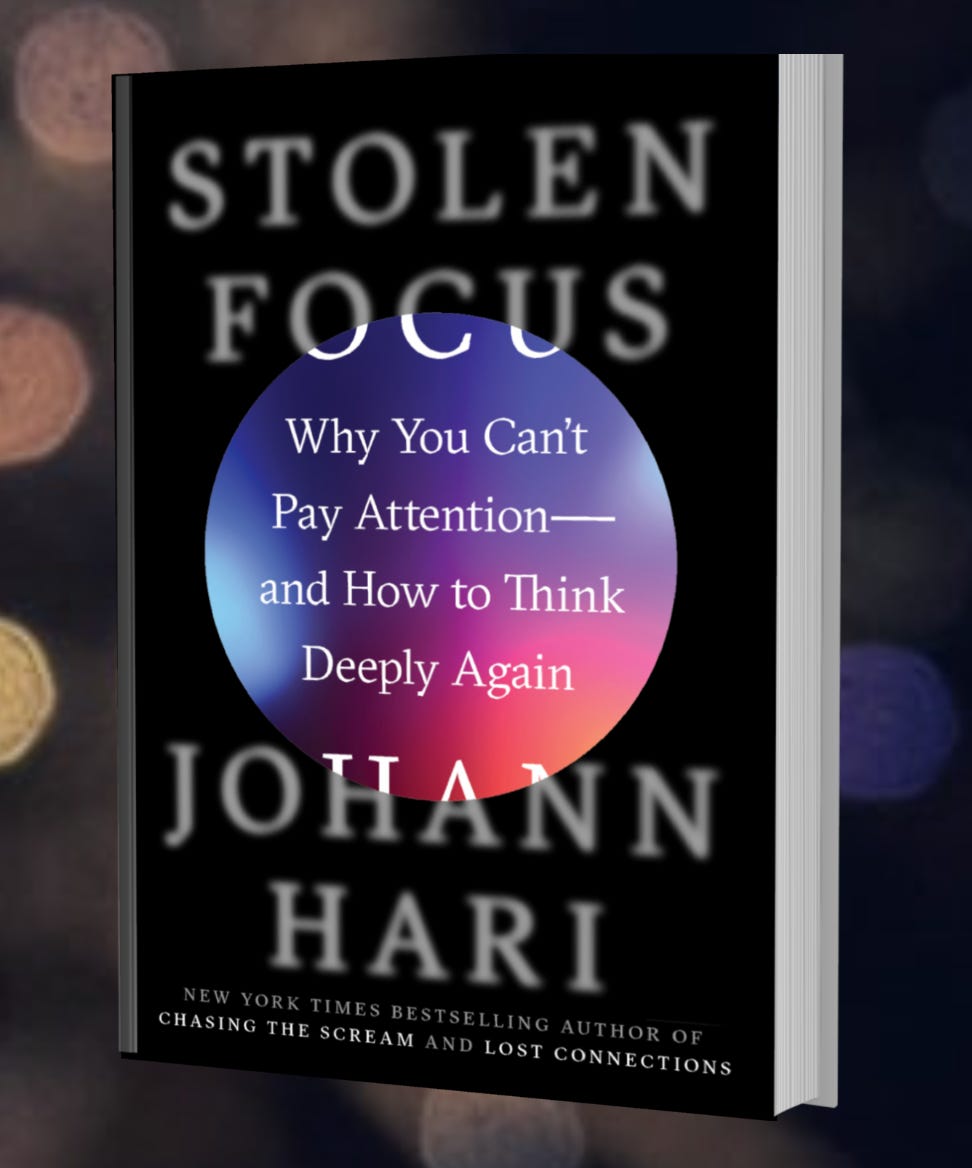
Julia: A friend recently recommended Stolen Focus by Johann Hari, and it immediately shot onto my list of favorite “research + culture + memoir + existential self-help” books. If that genre doesn’t officially exist, apparently I’ve spent years accidentally specializing in it.
The basic premise is probably familiar to anyone currently reading this while also toggling between 14 tabs and half-listening to a podcast: something about our relationship with attention feels profoundly off.
Hari explores the ways technology, overstimulation, stress, and modern life are reshaping our ability to focus, think deeply, and tolerate boredom, while also weaving in his own attempts to change his habits and understand what’s happening. Some parts have genuinely changed how I think about my own tech use; other parts have made me think much harder about the world our kids are growing up inside of—and what we can do as the adults in the room to change things.
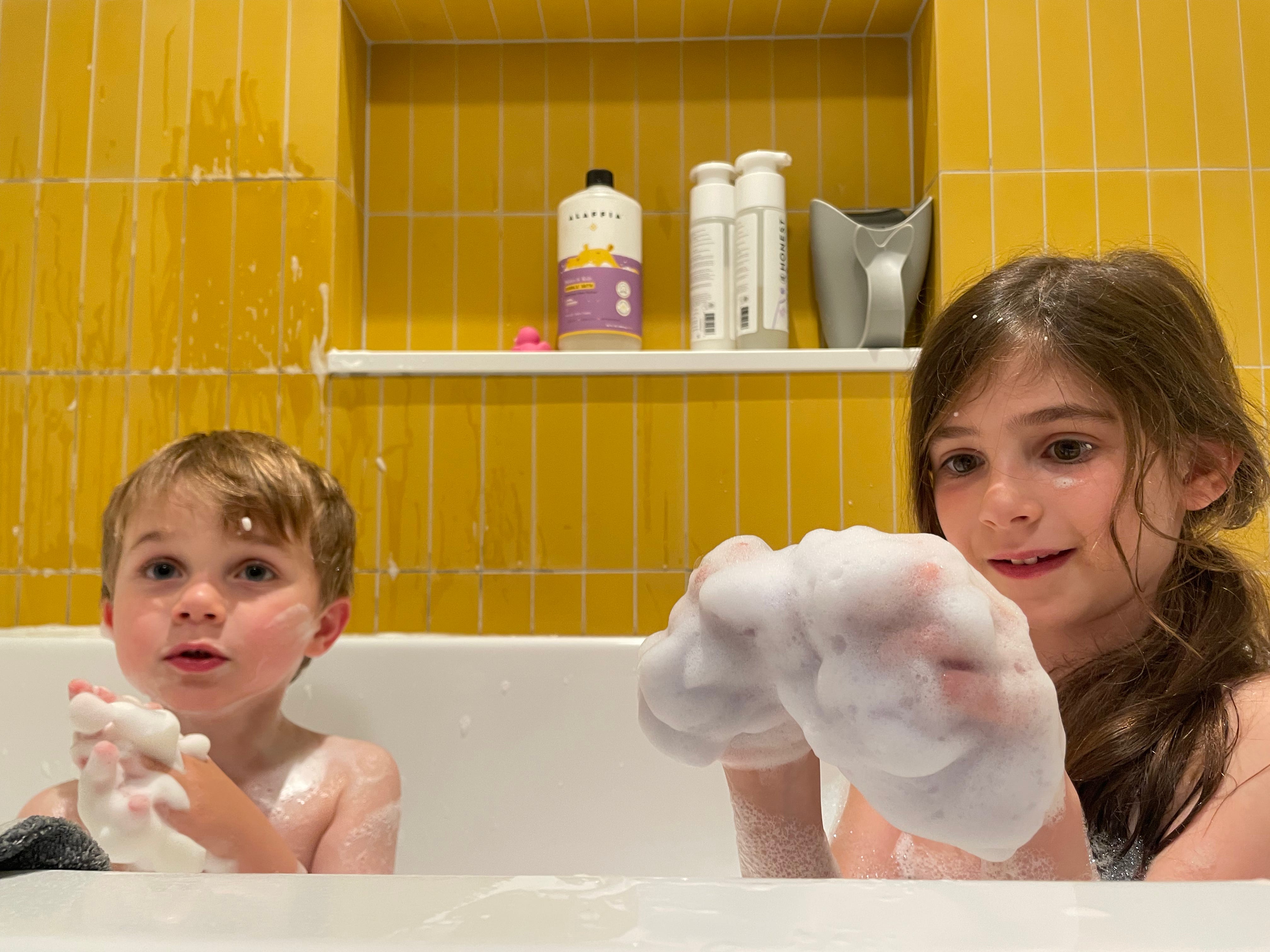
Alex: Bath time is a battlefield. Our kids are no longer at the malleable stage of toddlerhood when a bath was guaranteed splashy fun time. Sure, once they are in, it is nearly impossible to get them out, but getting them in there in the first place is the challenge.
In that respect, Dojo Sensory Soap is a game changer. Think: silly string, but cleansing. If we have Dojo in house, they will pretty much request baths, even if the timing is ridiculous (no you may not bathe five minutes before we are about to leave for school).
Alex: There was a harrowing period in our home when our kids were obsessed with a Spotify playlist called “Silly Songs for Kids,” featuring such jams as “Farting is a Part of Life” and “The Poop Song.” If I hear either of those any time soon I might start twitching.
So it is a blessing when a band or musician releases good kids music. I was always a fan of Jack Johnson’s album from the Curious George movie, as well as Zee Avi’s Nightlight. They work in the way a Pixar movie works—high quality entertainment made by professionals that satisfies both kids and adults.
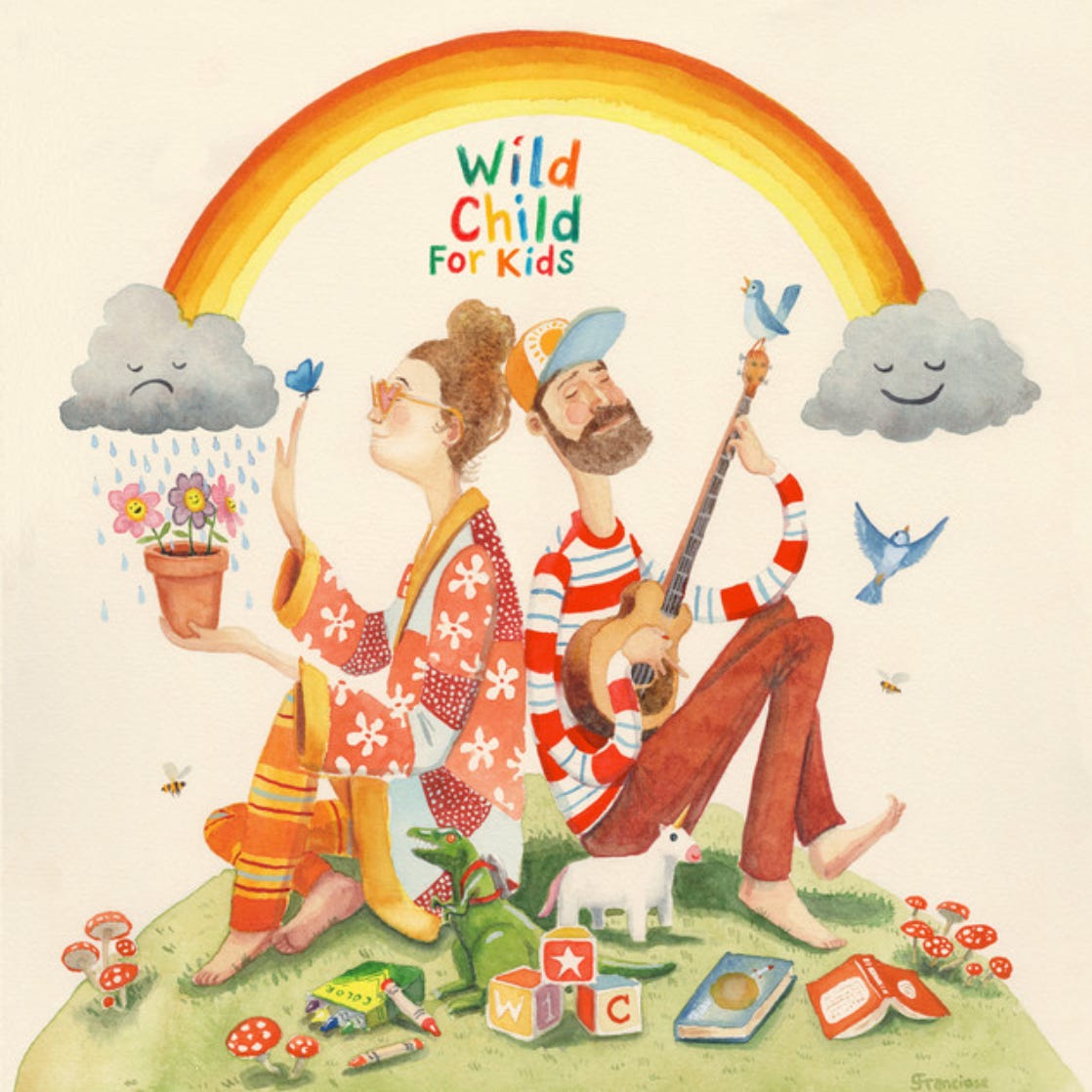
The duo Wild Child has been making indie folk music since 2011, but despite the name, the tunes were for adults. But this year they dropped Wild Child for Kids, and it is full of delightful melodies that my own kids tolerate and that I actually enjoy, with zero derriere references.
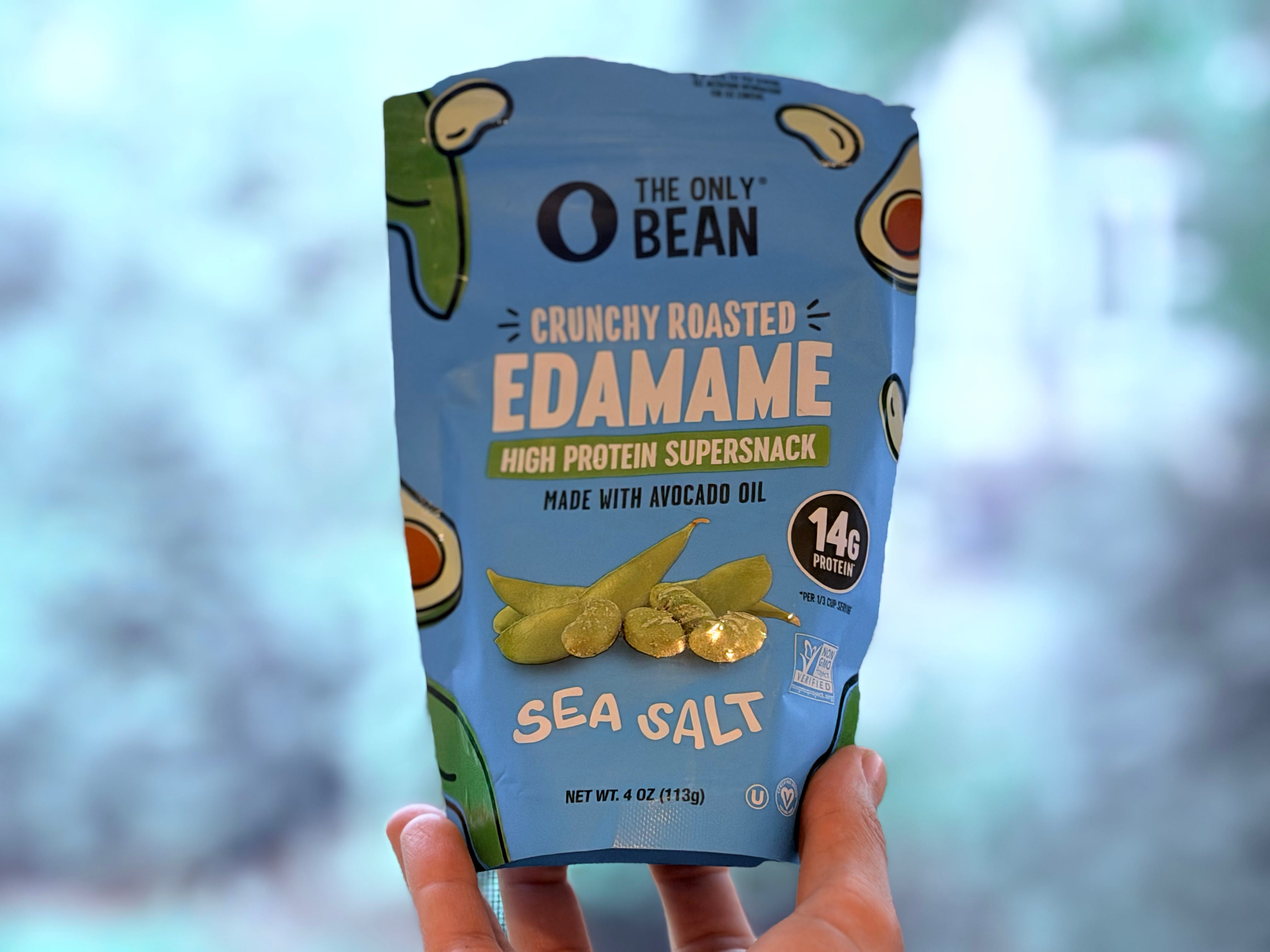
Alex: Vegetables are the most stereotyped food group. They have a perception of being gross, and so kids often assume they will be, resulting in a self-fulfilling prophecy of the tastebuds. I think we should just rename them crunchplants and try again.
The exception, in our household, is edamame. When we get edamame our kids consume it voraciously. I don’t know if it’s because squeezing the bean out of the pod is a satisfying process or if it’s because the pod has been cooked in absurdly salty water, but I don’t ask too many questions when they are inhaling a crunchplant.
The Only Bean makes dried edamame, and it’s an excellent car snack with a Crumble Score of only 3 out of 10 (jk, we made the latter up, but can someone please invent an app that identifies the least crumbly car snacks?). Plus the protein and fiber content give it an excellent Yuka rating of 75.
Dr. Meredith Elkins’ Instagram
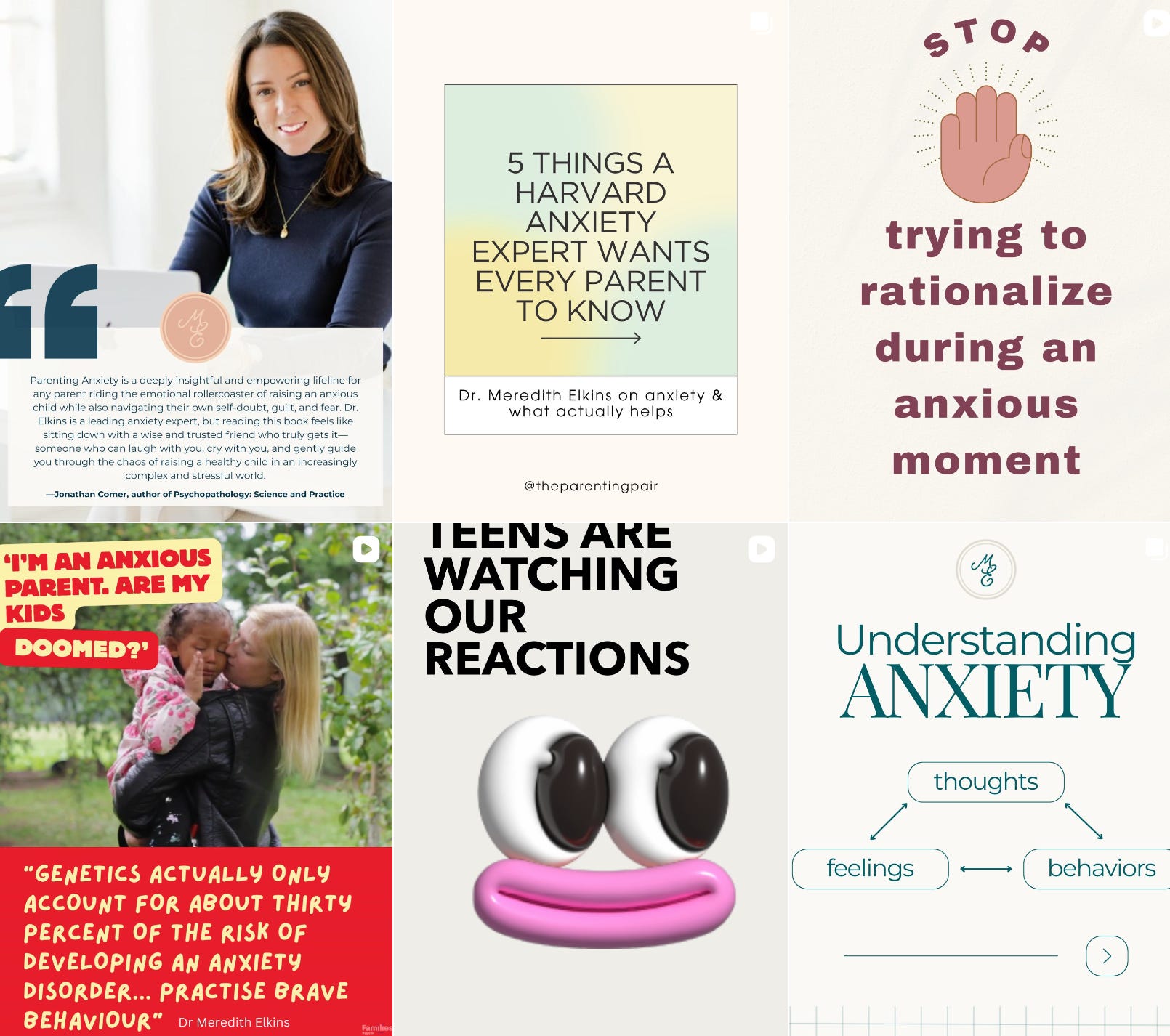
Julia: For people who do not currently have the bandwidth, attention span, or emotional energy for a full-length book: follow Dr. Meredith Elkins.
Meredith is the Program Director of the McLean Anxiety Mastery Program at McLean Hospital and an instructor at Harvard Medical School. She also recently published one of the best parenting anxiety books I’ve read in years. But for those who want their child anxiety advice in a bite sized format: her Instagram is an immediately useful resource for exhausted parents trying to separate evidence-based guidance from the endless stream of anxiety content online.
Her voice is warm, funny, practical, and refreshingly free of the platitudes and fear mongering that dominate parenting social media. Meredith has that rare ability to take the techniques that actually work in therapy offices and translate them into real-life parenting. Kinda like what we try to do here at The Playbook: evidence-based ideas translated into language normal humans can actually use.
Two Percent with Michael Easter Podcast

Alex: The Comfort Crisis was the kind of book that shifted my thinking. (Mine too! - Julia). Easter’s own personal tale was interwoven with fascinating research on all the ways that we shrink our worlds so as to remain firmly entrenched in our comfort zones, despite the harms of that approach.
I’ve been an Easter fan ever since, reading his books and subscribing to his substack (which I once had the honor of being interviewed for on the topic of mindfulness).
Easter is an expert at distilling complex scientific research into actionable everyday strategies. On his newly launched podcast he interviews a wide range of fascinating thinkers and has the kinds of conversations that stick with you (a favorite recent episode was on the power of constraints with author David Epstein). This is the kind of listening that will leave you just a little bit more informed and inspired each time.
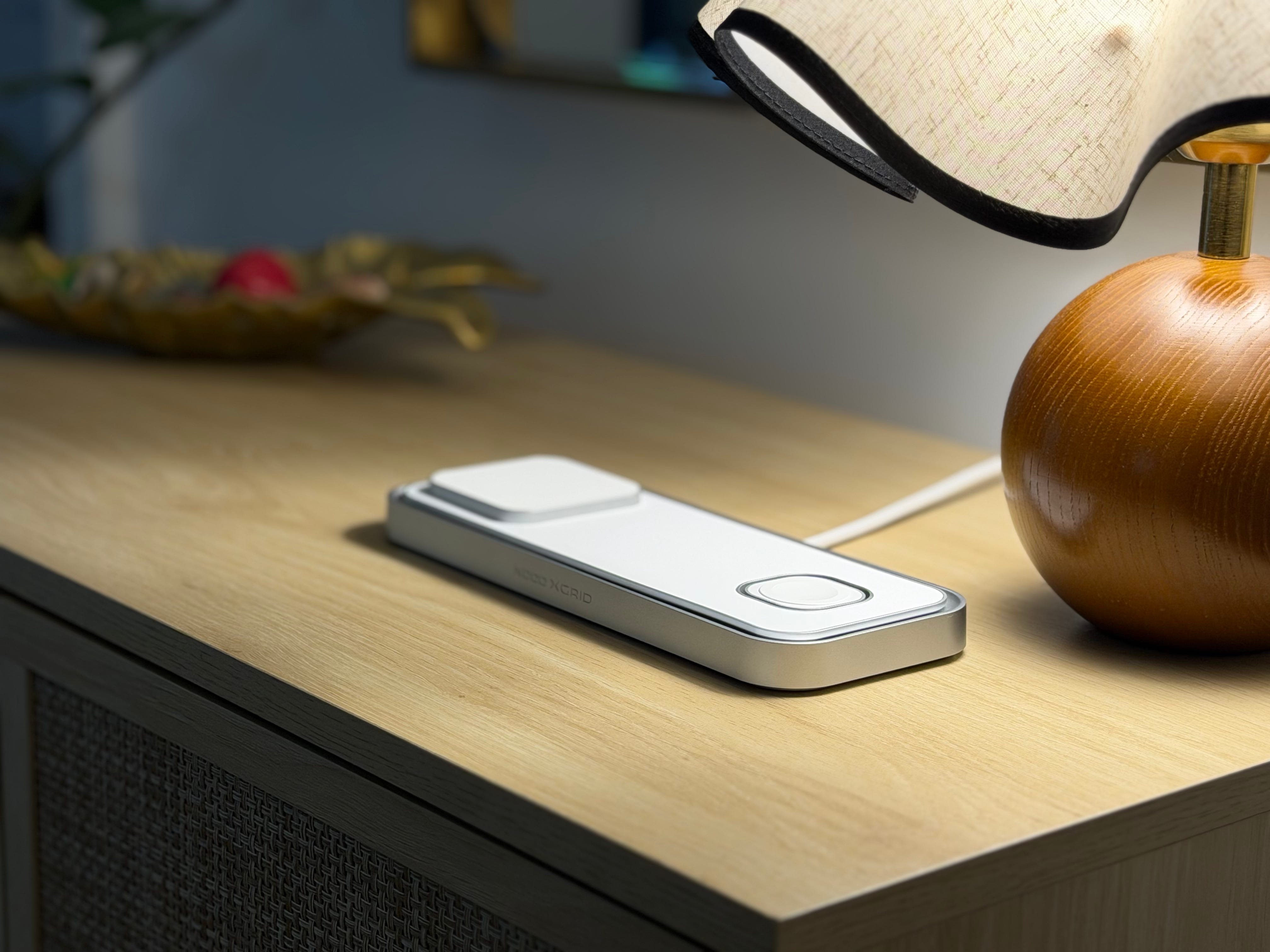
Alex: We recently got a charging pad for our house after we grew sick of trying to find the right combination of charging cables and blocks to power our devices, a puzzle that somehow always seemed to be missing a crucial piece. There are many out there, but I ordered one from NOCO, and at first my wife blanched, not wanting another product in our entryway.
Little did she know this charging pad looks clean, works well, and best of all, reduces our screen time. As one of the authors of a newsletter focused on mindfully raising kids, you’d think I would have mastered the ability to put away my device when I’m at home. But the “slot machine in your pocket,” as former Google design ethicist Tristan Harris called it, is something I tend to reach for habitually if it is on me.
Leaving my phone on the charging pad has helped with that temptation. Out of sight, out of mind is not just a phrase, it has been borne out in research that suggests that even the presence of a phone makes social interactions less enjoyable.
I have found myself more fully attending to being with my family when my phone is not present. Plus, it is a classy touch to offer a charing pad to guests who have low battery. And it ends up charging not only our devices but our personal fulfillment batteries as well.
We hope you enjoyed this inaugural edition of The Assist! And remember to upgrade to paid if you want to keep receiving monthly recommendations of our favorite hacks, tools, and obsessions.